


Jirinden(46)On site there are various tools…everything will be your armor, they are called Kogusoku (小具足) .
「Sono ba no ShoDogu… mina onore no Gusoku to naru yue ni… Kogusoku to wa iu 」(Heishu Jirinden Volume 3 Kogusoku)
・On site there are various tools…everything will be your armor (Gusoku)so it is called…Kogusoku
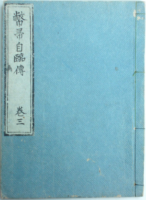 Where there are many people, inevitably incidents will occur, in such places there are seats and alleyways, to not make a mistake before an incident occurs, in that place there are various tools, big things, small things, long things, and short things. think of the convenience of the place, and pay attention for things that are close to hand and easy to take, so that there is no shortage. All these tools, as they become our protective tools, are called, Kogusoku (Small armor) in contrast to real armor. (Gusoku)
If that is the case, a blade should not be used lightly, when an incident suddenly occurs, we manage the situation by using the tools place in the various places, and we must not move away.
In this case, it is the rule of the warrior to always keep an eye on people, and select people to be your allies, On the other hand to put their mark on tools to make them their own protective armor.
(Presented by Yuji Wada, Costantino Brandozzi, Draven Lee Powe, Constantin Von Richter)
Jirinden(47)He shows greed and tries to steal from others, it becomes a fight with the use of swords.
「Oroka naru monono kuse to shite wa、…yokushin wo motte hito no mono wo ubawan to suru kotoyori yaiba nimo oyobi keru」(Heishu Jirinden Volume 3(Tsukadome)
・It’s the habit of foolish people to get greedy, and attempt to steal things from people, so it becomes a fight with the use of katana.
The part you grab and use is the handle, if the handle remains secure to the scabbard, there will be no fighting with swords
However it is your own carelessness that the enemy has taken your sword, it is the ultimate regret that many fools are destroyed by their own sword.
By ones carelessness the sword is stolen by the enemy, when one tries to steal someone’s items out of greed, it becomes a fight using swords. If you are vigilant and subdue the enemy using the hilt, no-one will take advantage of suki (weak point). If you are vigilant and quick to respond to your enemies, it is easy to govern the world. If you do that, you can completely control the fight with the tsuka and it will not become a sword fight. Even if your opponent attacks, you can easily suppress it with the method called Tsuka-dome. We React promptly and firmly.
(Presented by Yuji Wada, Costantino Brandozzi, Draven Lee Powe, Constantin Von Richter)
Jirinden (48) Koshi no Mawari is the way to govern others.
「Koshi-no-mawari wa onore yori hito wo osamuru no michi to site…myomoku wo tukeoku nari」(Heishū Jirinden, Volume 3°, Koshi-no-mawari)
・Koshi-no-mawari is called the right way to govern others.
A warrior should always remember their Koshi-no-Mawari. “Koshi”(hips) means a place that should always be guarded, “Mawari”(Rotation) means that things happen with us as the starting point. This means Koshi-no-mawari is of great importance, and to take care of things that are important so things do not happen to ourselves. Bujin must always remember his Koshi-no-mawari, and if something happens, he must first think of why it has occurred.
The Katana is a tool for policing and controlling misdeeds, the tachi (longsword) is for helping the lord, and the wakizashi (short sword) is for stabbing yourself in the side when you make a mistake. If one is hasty and impatient, it is easy to forget one’s lord and his father, and imprudence and rashness will deny one’s previous achievements. People who lose themselves in a moment of anger are not warriors in the first place, but people who lack the ability to plan big projects. For this reason, Koshi-no-Mawari is the way to govern people, and Tsuka-dome is the way to suppress and control obstacles that others create.
(Presented by Yuji Wada, Costantino Brandozzi, Draven Lee Powe, Constantin Von Richter)
Jirinden (49) Because your mind wanders, you deceive yourself.
「Mayou kokoro no aru yueni wadowasaruru no onore mo aru」(Heishū Jirinden, Vol.III, Gunchū-kumiuch)
・Because our mind wanders within us, we ourselves must always be aware, as we ourselves are deceived.
The reason the mind is unsettled is because we have not cultivated our minds enough. Ki (Will, Spirit) moves depending on how much effort you use in daily life.
It is said that if one never rests, always moves, and always learns, and has mastered behaviour, for example in a great army of 37,500 people, he will not inferior.
If you don’t maintain your Ki enough, you will lose the ability to concentrate, loose the decisive moment, lose your place, not only that, miss the enemy you have to strike, the weapons appropriate to you stolen, and injure yourself.
Kumi-uchi exists to quickly decide the outcome of a fight, but prolonging the fight using Kumi-uchi is a disgrace to a warrior. Lock your arms so they are on the outside of your opponent’s arm, twist the enemy’s neck under your armpit with your dominant hand, and stop the opponent’s dominant hand with your left hand.
(Presented by Yuji Wada, Costantino Brandozzi, Draven Lee Powe, Constantin Von Richter)
Jirinden (50) Those who take on a role, and have no loyalty will certainly make many blunders.
「Yaku wo ninoute Chū naki mono wa kanarazu ochido mo shigeki mono nari」(Heishū Jirinden, Vol.III , Bajō no kumiuchi kubi tori you no koto)
・Those who take roles and have no Loyalty (Chū, Loyalty) are those that will always make many blunders.
Those who take on roles and have no Chū (Chū, Loyalty) are those who always make many blunders.
If there is someone in a superior position who is role is frivolous and disloyal (Fuchū, disloyal), you should immediately leave that role. If y ou cannot leave that role, you will destroy yourself in that role. You should not give difficult tasks to disloyal people. This is to be disloyal. You take on the difficult tasks, and give these people the easiest tasks.
If there is no harmony between the upper and lower classes, the country will be destroyed. Therefore, it is the first duty on the person on horseback to not injure the horse. When man and horse become one, they become able to move freely, consequently when destroying an enemy, all you have to do is hurt your enemy’s horse. Cut the horse’s neck. Cut the horses reins. Doing that man and horse will no longer be united, and the enemy will not be able to move as they want.
(Presented by Yuji Wada, Costantino Brandozzi, Draven Lee Powe, Constantin Von Richter)
Jirinden(51) Don’t stand where on the place you shouldn’t stand, stand on the place you should stand.
「Tatsu bekarazaru chi ni tatazu, tatsu beki ba ni tatsu」(Heishū Jirinden, Vol.III , Gokui)
・Do not stand on the place you should not stand, stand on the place you should.
It is called 位(Kurai, Position or Status)to stand on the ground you should, not on the ground you should not stand.
Those who do not observe 義 (Gi, Righteousness) and exceed their own position, and stands on the ground of others prefers a dangerous path. Those who prefer a dangerous path will not have a peaceful end. Those who do not well understand 理 (Ri, Reason) does not know the method to regain his ground when it is taken from him, those with no place, suffer from being lost, those who suffer from being lost will be perplexed in the end.
Originally when people met, there is always the place of master and guest. Those who neither exceed nor is exceeded, neither takes, nor is taken away from, one who clearly understand their position, when carrying out something, has no excess, those are called one who understands knows well their position. It is the status of each person to have a place where they are naturally allowed to stand. With another person present, it is necessary to establish Kurai, and the appropriate position to stand in.
(Presented by Yuji Wada, Costantino Brandozzi, Draven Lee Powe, Constantin Von Richter)
Jirinden (52)When subjugating people, victory lies in separating the wrongdoers.
「Subete hito wo seisuru ue wa, akunin wo wakeru zo kachi naru beshi」Heishū Jirinden, Vol.III , Mukō Nihō)
・Roughly speaking, when subjugating people, victory lies in separating the wrongdoers.
All matters related to humans are subjected to the laws of heaven and earth. For example, wind cannot blow from two directions at the same time, but wind that starts from one direction can travel in three directions. People who are whole-heartedly dedicated to one thing do not have a “double mind” and are not obsessed with “status,” so they can easily confuse people who are double-minded and obsessed with status.
When subjugating people, victory lies in separating the wrongdoers. The reason is because bad people have a tendency to band together. Bad people to begin with, even if promises are made, as soon as it becomes disadvantageous to them, will break their promises and do harm to others. At times like these, you should hold your ground, wait for the enemy to split into two, and then deal with them head-on. As long as you hold your ground, even if there are many enemies, it is the same as one enemy.
(Presented by Yuji Wada, Costantino Brandozzi, Constantin Von Richter, Keith Tang)
Jirinden(53) To govern a country and bring peace to the world means not to commit wrongdoings or take what belongs to others.
「Okashi ubau koto no nakiwo ”Chi koku hei tenka” to iu narame 」Heishū Jirinden, Vol.III , Waki Nihō)
・To govern a country and bring peace to the world means not to commit wrongdoings or take what belongs to others.
In order for me to exist, the existence of things is essential. However, I have my own position, and things have their own position as well. This state of not infringing on each other and existing in a state of harmony is what “治国平天下, governing the nation and bringing peace to the world.” means. That being said, as the relationship between myself and things continues over time, the boundaries may become blurred, and I may invade that boundary unconsciously.
Even if you are a powerful general who can freely command the entire army, if you neglect your preparations and lose your defenses, allowing enemies from neighboring countries to invade, you will be rendered powerless. An excellent leader always clarifies their position, maintains good relations with neighboring countries, and strengthens their defenses daily. If someone attempts to invade by taking advantage of natural disasters, they will respond immediately. It is precisely because they are always prepared and vigilant that a swift response is possible.
(Presented by Yuji Wada, Costantino Brandozzi, Constantin Von Richter, Keith Tang)
Jirinden(54)Without knowing yourself, your place and your(the right) time, it is difficult to know the essence of anything.
「Mazu onore wo sitte tsugi ni onore no ba wo shiri onore no toki wo shiru ni arazare ba mono no Atari wo siru koto katakaru beshi」(Heishū Jirinden, Vol.III , Atari jou chū ge)
・Without knowing yourself, then knowing your place and knowing your time, it is difficult to know the essence of anything.
First, know yourself; then, know your place and know your (the right) time. Without understanding these, it will likely be difficult to grasp the essence (中 atari, 中心) of anything. You may be able to understand the so-called essence (中 atari, 中心) when you hear about it, but when it comes to truly understanding the essence (中 atari, 中心), if you haven’t truly grasped (ataru, 当たる) it, even if you claim to have, it cannot be considered as such. How can you grasp this essence? First, you must understand people, then know the context of the situation, and finally, know the timing.
What does it mean to first understand people? It means recognizing that people possess both yin and yang(陰陽 Inyō), as well as both truth and lies (虚実 kyojitsu), and that you yourself also possess these qualities. If you use yin to attack yin, or emptiness/lies to attack emptiness/lies, you will not understand the essence even if you say it did. Showing others a false appearance to increase your own false appearance stems from not knowing yourself. It is only yourself who does not hide anything from yourself. If you ask, you will receive an answer; if you act, you will understand. Therefore, knowing yourself is not difficult.
If you do not even try to understand something as simple as that, how can you expect to understand things that are difficult to know, like your enemy’s secrets? After thoroughly understanding yourself, you can then approach every corner of your opponent.
(Presented by Yuji Wada, Costantino Brandozzi, Constantin Von Richter, Keith Tang)
Jirinden(55)There is no way to maintain peace without uniting the upper and lower(This can mean higher or lower ranks/positions).
「Jouge wo ittou ni suru koto wo nokete betsu ni chihei wo nasu no michi nashi」(Heishū Jirinden, Vol.III , Bajou no nuki)
・There is no way to maintain a peaceful reign without uniting the upper and lower.
When a leader commands while considering the personal honor of a general or soldier, he quickly goes against the will of heaven and ultimately is unable to govern those above and below him. Without uniting those above and below into one, there is no way to maintain peace in the realm. A person who draws their sword while on horseback should first inform the horse before unsheathing it, ensuring not to startle the horse. If the horse is startled, it will no longer obey, and that failure lies with the rider. Those in leadership must understand the hearts of those below them, praise their achievements, teach them what they cannot yet do. Uniting those above and below into one cohesive whole is important.
Those in lower positions should follow the commands of their superiors. However, individuals of lower status often do not grow up under the same conditions as those of higher status. They may not have the opportunity to choose a mentor to guide them from childhood, lack the time to learn, and often struggle with the challenges of daily life as they grow older. As a result, their knowledge and abilities may be inferior, and they may fail to carry out commands as intended. If this reality is not understood and commands are issued indiscriminately, it can lead to unintended failures.
(Presented by Yuji Wada, Costantino Brandozzi, Constantin Von Richter, Keith Tang)
Jirinden(56)When the presence of a noble person spreads, the bad habits of the petty and insignificant naturally fade away.
「Kunshi no fu ya okonaware te syojin no zoku ya noefu su」(Heishū Jirinden, Vol.III , Kasumi sou makuri)
・When the presence of a noble person spreads, the bad habits of the petty and insignificant naturally fade away.
If there is someone who firmly plants their feet on the ground, the place where they stand is the place that suits their position or status. If there is someone who attains a position, but they cannot maintain it, if the person’s feet is lifted, how can a tiger remain at ease? If one’s position is broad, their movements will inevitably encroach upon others’ positions. Conversely, if one’s position is narrow, their position is prone to being stolen. This is because neither side has truly secured their place.In this way, those who protect their position well are like clouds or mist in the sky. Wherever they go, they naturally display their beauty, yet when they depart, they leave no trace behind.
The reason nothing is left behind is that everything changes in an instant. Neither welcoming nor sending off, neither stopping nor forcing, neither invading nor being taken—those who can truly maintain their position understand others, understand the situation, and understand the timing. They change in an instant, and in doing so, they embody beauty. Who can master such an ability? It is those who first know themselves who can achieve this. There is nothing they cannot govern, no battle they cannot win, and no enemies under heaven. When the presence of a noble person spreads, the bad habits of the petty and insignificant naturally fade away.
(Presented by Yuji Wada, Costantino Brandozzi, Constantin Von Richter, Keith Tang)
Jirinden(57)A person with good eyesight may still fall into a well.
「Meigen no mono kaette i ni otsuru」(Heishū Jirinden, Vol.III , Yami no yasaguri)
・A person with good eyesight may fall into a well.
If you serve a monarch in a country without order or discipline, you must correct and teach /guide its customs and traditions.If you do not do so, there is no greater disloyalty; rather than having citizens who follow orders, you will incur the wrath of heaven, and your guilt will be even greater.Also, those who do not serve the ruler should be careful not to fall into a trap set by slanderers and should remain hidden, avoiding the public eye.When a man of knowledge is guilty, it is a disgrace to the whole nation, and the man of knowledge himself cannot avoid the disgrace of straying from the right path.Therefore, a person with knowledge does not bring shame to their lord or act against the way of heaven. This is the reason for remainining hidden and do not appear in public.
By the way, isn’t it those with good eyesight who end up falling into a well because they become overconfident in their vision, gazing into the empty space of daylight and stepping off a familiar path in the dark? Those who can navigate darkness well would not make such a mistake.
(Presented by Yuji Wada, Costantino Brandozzi, Constantin Von Richter, Keith Tang)
Jirinden(58)Being unprepared invites danger
「Onore no sonae zaru wa kiran wo maneku nari」(Heishū Jirinden, Vol.III , Toiri)
・Being unprepared invites danger
Even in a chaotic country, if there is a reason to stay, one should remain. Even in a dangerous country, if there is a reason to enter, one should go. Such is the way of the warrior. Establishing one’s rightful position in that country and making those who separate and those who supports into one’s shield requires accepting things as they are. In doing so, one’s movement in and out of the country becomes a matter of personal freedom, unaffected by external conditions. Even if you know the state of affairs of that country, if you are not prepared, you will not be able to deal with dangers. Knowing that state of affair involves danger. Being unprepared invites danger. Inviting danger and becoming involved with it will only leave danger behind.
Those who uphold their rightful position are not like that. They do not forget to swiftly lower themselves when using objects as shields. When seated, they move from corner to corner, searching for small arms. Using objects as shields means making wise and talented individuals your close friends. Lowering oneself means being deeply respectful in manners. Moving from corner to corner means searching for a position and staying in a lowly one. By doing so, there is no danger at all.
(Presented by Yuji Wada, Costantino Brandozzi, Constantin Von Richter, Keith Tang)
Jirinden(59)Truth is the root of righteousness, and righteousness is the flower of truth.Being unprepared invites danger
「Jitsu wa Sei no ne Sei wa Jitsu no hana」Heishū Jirinden, Vol.III ,Kodachi jitsumyou ken」(Heishū Jirinden, Vol.III , Toiri)
・Truth is likened to the root of righteousness, and righteousness to the flower of truth.
Even if one acts righteously and with sincerity, because of wicked people (佞奸邪悪, neiganjaaku, who appear good on the surface but are corrupt at heart), one maybe be tricked into sin and receive punishment. If someone who is truly innocent ends up with such a consequence because of a slanderer, it will make the unjust nature of the punishment known throughout the country and leave a precedent for the future where even righteous people may be punished. Such an outcome occurs because a state of Jitsumyō(実妙,the true ability/skill) have not been reached.
As everyone knows, things without roots do not last long. Even if one maintains the correct position, if it is not accompanied by the reality of the situation, one cannot attain the skill to annihilate deceitful and wicked individuals. If one follows the path of sincerity (正実, seijitsu) and moves heaven and earth, the great sword (大太刀, ōdachi) will be supported by the small sword (小太刀, kodachi), and punishment will turn into reward. The small sword (小太刀, kodachi) is a tool for atoning for one’s sins, but if there are no sins, there is no need to use it. Rather, it is used to defend against slanderers. This truth always possesses myō (妙, ability, power). In preventing deceitful and unjust individuals, one must first correct oneself and, based on sincerity and honesty, then correct others. This is what is called myō (妙). The truth (実, jitsu; sincerity) is the root of righteousness (正, sei; correctness), and righteousness is like the flower (that blooms from) of truth. The concept of ‘myō’ (妙, myō) can be likened to the ‘fragrance’ that envelops the entire bloom of truth and righteousness.
(Presented by Yuji Wada, Costantino Brandozzi, Constantin Von Richter, Keith Tang)
Jirinden(60)If you want to become more fortunate, hope to have meaningful connections in this world.
「Un no tsuyokaran koto wo hosse ba mazu sejou en no aran koto wo hosse yo」(Heishū Jirinden, Vol.III ,Manji no kan)
・If you wish to become more fortunate, first wish to have meaningful connections in this world.
Good and evil exists in one’s human nature (賦様 fuzama). This refers to how one makes use of their natural-born talents. Indeed, there are differences in luck, and even if a person possesses both integrity and truthfulness, they may not be able to fully make use of their talents due to the circumstances of their innate destiny. As a result, they remain buried and live out their lives unnoticed. This happens because there is no one above to love them, nor anyone below to respect them. Without being trusted or looked up to, they end up unable to make the most of the abilities they were born with. Therefore, if you wish to have stronger luck, first, wish to form meaningful connections in this world. In this world, if we are all bound by ties like those of siblings, who would need to compete over who has the better fortune?
When everyone around you—above, below, left, and right—becomes your protection, you can maintain your position broadly and for a long time, no matter the country or era, and whatever you set out to do will be easily accomplished. All masters have one thing in common: they pursue a single way of thinking with unwavering dedication.
(Presented by Yuji Wada, Costantino Brandozzi, Constantin Von Richter, Keith Tang)
Jirinden(61) If one goes against yin and yang, heaven and earth, or the mountains and rivers, unexpected demise will follow.
「Un no tsuyokaran koto wo hosse ba mazu sejou en no aran koto wo hosse yo」(Heishū Jirinden, Vol.III ,Jitsugetsu huu hansui no koto)
・If one goes against yin and yang, heaven and earth, or the mountains and rivers, unexpected demise will follow.
Human existence is due to the life force(氣血, kiketsu) generated by yin and yang(陰陽, Inyō, the two fundamental principles) , beginning and end(首尾, shubi, beginning and end) is fulfilled by heaven and earth(天地,Tenchi), limbs (四肢, shishi, hands and legs) are housed by mountains and rivers. Therefore, if one goes against yin and yang, heaven and earth, or mountains and rivers, they will also go against the way of humanity, and may suddenly face destruction.
The passage of time (月日, tsukihi, the passing days and months) embodies the essence of yin and yang. Wind and rain (風雨, fūu: wind and rain) are residual movements of heaven and earth, and sloping waters (坂水,hansui: water flowing down a slope) are the pathways of mountains and rivers. These forces cannot be opposed. To go against them is to undermine one’s own path, to harm oneself, and to misjudge one’s position. This is precisely why we, as human beings, must humbly accept our proper place in the natural order.
(Presented by Yuji Wada, Costantino Brandozzi, Constantin Von Richter, Keith Tang)
Jirinden(62)Even if one has natural talent (才能, Sainō), if they do not learn, it becomes a fault that prevents them from fully utilizing it.
「Tensei no sai ga attemo manaba zareba busai no ochido to naru」(Heishū Jirinden, Vol.III ,Sansai no kane)
・Even if one has natural talent (才能, Sainō), if they do not learn, it becomes a fault that prevents them from fully utilizing it
The talent (才, Sai, movement) of Heaven bestows blessings upon the Earth and materializes its form; the talent of Earth borrows the power of Heaven to bring forth things; and the talent of Man is to act in accordance with Heaven and Earth. The “Three Talents” (三才,San-sai,Heaven, Earth, and Man’s ability) are great entities, but they do not exist independently. “Kane” (矩, Kane, meaning law or principle) refers to “Kane” (臭声, Kane, sent and sound). Those who seek the truth of things must first smell the scent and listen to the sound to reach the answer. This is the first gateway in the search for truth. Therefore, one should aim for that scent and sound in order to know the truth. That truth is what is called talent or function (hataraki).
Without this sai (才, Sai, movement), one will encounter misfortune in all endeavors and be unable to accomplish anything. However, some people give up, believing that sai (才能, Sainō) is something inborn and not something to be learned, and they go through life without ever acquiring it. This is truly regrettable. It is precisely because talent (才能, Sainō) can be developed through learning that one can achieve merit and accomplishments. Even if one possesses natural talent (才能, Sainō), without learning, one may go too far or fall short, failing to make full use of that talent (才能, Sainō), which then leads to mistakes. That is no different from not having any talent at all. In other words, true talent(才能, Sainō) is the ability to discern the right moment and use one’s abilities effectively. One should strive to learn and come to this realization.
(Presented by Yuji Wada, Costantino Brandozzi, Constantin Von Richter, Keith Tang)
Jirinden(63)“Shi-kan-satsu” is the path to reach kirin gyoshin shintsū (the harmonious connection between the mind and the mechanism/core/essence)
「Shikansatsu wa kirin gyoshin shintsū ni itaru no kane nari」 (Heishū Jirinden, Vol.III, Metsuke Kirin Gyokushin Shintsū)
・“Shi-kan-satsu” is the path to reach kirin gyoshin shintsū (the harmonious connection between the mind and the mechanism/core/essence)
If the heart of a person who tries to accomplish something is not in harmony with their goal, then everything will not become clear and he will always have oversights and fail. Therefore, train/practice with a method called Metsuke no Shi-Kansatsu (目付けの視観察,Metsuke no Shi-Kansats,focused/visual observation through the eyes). Miru(見る, Miru, See) means understanding with the eyes. However, understanding with the eyes is useless if the heart/mind does not understand, so there is a method of training to make the heart/mind understand called the teaching of Shi-Kansatsu (視観察の教え, Shi-Kansatsu no Oshie,the teaching of visual observation). Shi’ (視, shi) means to look carefully and attentively. For example, a fabric looks beautiful on the front side because, while the back is simply dyed red over the raw material, the front has been dyed white first and then red over that. So ‘shi’ is to notice such details by observing closely. Kan (観, kan) means to observe and appreciate something deeply. For example, noticing how the fabric looks impressive because the red front is paired with a red lining — that act of savoring the visual harmony is ‘kan’.”
In the course of training, unless you observe things closely, you won’t truly understand them in your heart. Just like with a clock or a mechanical doll, you cannot comprehend how it works unless you examine its mechanism. First, it is important to observe as if looking into the crystal’s core (玉芯, gyokushin, the true center), and to give a heart to a doll with no heart. Satsu (察,satsu, perception/intuition) means drawing out emotion from a voiceless doll, but unless you perceive it within your own heart, it is difficult to grasp the doll’s feelings.Shi-Kansatsu (視観察 Shi-Kabsatsu) to observe, see, and intuit—is the method that leads to Kirin-Gyokushin-Shintsū(機輪玉蕊心通), that is, to connect your heart with the mechanism and its very core. This applies not only to things, but also to human relationships. Unless one has the ability to focus the heart on a goal, see through to the emotional core, and discern the mechanism (仕組み, Shikumi, structure) in advance, one cannot bring matters to fruition.
(Presented by Yuji Wada, Costantino Brandozzi, Constantin Von Richter, Keith Tang)
In Japanese, “見る” “視る” “観る” and “察る” are all pronounced “みる” but each has a different meaning.
This chapter explains the meaning of each kanji and teaches us that we must see the essence of things.
- 見る (miru)
Meaning: In a broad sense, it means to capture something with the eyes, to take something into one’s field of vision.
Nuance: It includes not only conscious actions, but also things that come into one’s field of vision unconsciously
Examples:*
Seeing people walking down the street. Seeing birds flying in the sky.
Watching television.
Seeing danger and avoiding it.
- 視る (miru)
Meaning: It means to look carefully, consciously, and with focus.
Nuance: It includes the intention to examine or observe an object in detail. Examples:*
A doctor looks into the eyes of a patient.
A security camera watches a suspicious person. Looking into the eyes of the other person when talking.
- 観る (miru)
Meanining: It means to look attentively, carefully, and thoroughly with interest.
Nuance: Has a strong connotation of appreciating or observing, and includes the intention of trying to gain something from the subject.
Examples:* Watch a movie.
Watch a sports game.
Look at paintings at an art exhibition.
Look at the plants in a garden and feel the change of seasons.
- 察る (miru)
Meaning: To try to understand or gauge someone’s feelings or situation from their facial expression or attitude.
Nuance: Has a strong connotation of sensing or guessing something that cannot be seen. Examples:*
I sensed something had happened from her facial expression. I could tell what he really thought from his words.
Identify the other person’s feelings and choose my words accordingly.
Jirinden(64)A method of using the body through square, round, curved, straight, and sharp forms.
「Mi no kane hō en kyoku choku ei」(Heishū Jirinden, Vol.III, Hō En Kyoku Choku Ei)
・A method of using the body through square, round, curved, straight, and sharp forms.
When explaining the concept of “sharpness” (鋭, ei, meaning a pointed or sharp shape) in humans, everything that exists between heaven and earth is most stable when it is thinner at the top and wider at the bottom. However, humans are broader at the top and narrower at the bottom — which makes us inherently unstable and not long lasting(prone to losing balance). Therefore, if one wishes to achieve good stability/balance, to neither fall nor tilt, it is first essential to learn about the concept of “sharpness” (鋭, ei). Standing firmly without moving in a “sharp” form is called “straightness” (直, choku, meaning a straight or upright shape). When “straightness” bends, it is called “curved” (曲, kyoku, meaning a bent shape). When the “curve” is taken to its full extent, it becomes “circle” (円, en, meaning a round shape). When the “circle” squats down, it becomes “square” (方, hō, meaning a square shape). The “square” (also called keta) represents the shape of the earth — the □ shape — and involves moving the sword in vertical and horizontal directions: up, down left, right. The “circle” (madoka) represents the shape of the heavens — the ○ shape — and involves rotating the sword in all directions: left, right, front, and back. “Curved” (kyoku) refers to the posture of bending and sinking, while “straight” (choku) refers to the posture of standing tall and rising.
If one becomes constantly aware of and proficient in the forms of the body — being curved (bent), being straight (standing without moving), and △being sharp (having good stability, not falling or leaning) — then one can obtain free movement in response to change, and there will be no illness of stagnated movement. Moreover, if one knows how to use the body and the timing to act, and becomes accustomed to the place (environment) in accordance with the time (situation), then what difficulty could there possibly be? One should train to make round (円・maru) things even more perfectly round, and square (方・keta) things into true squares through practice. Work that is done halfway — appearing neither clearly round nor square, with indistinct edges — will be of no use in actual application, and in the end, the task cannot truly be accomplished. Not to mention, one has not yet reached the stage called “talent” (才・はたらき). This “talent” is a display of a mysterious power so the teaching is: as a basic form of training to acquire this talent, begin your practice with the “method of the sounds and forms of square, circle, curve, straight, and sharp” (方圓曲直鋭の香音).
(Presented by Yuji Wada, Costantino Brandozzi, Constantin Von Richter, Keith Tang)
Jirinden(65)Advancing includes retreating and retreating is a sign of advance.
「Susumu mono wa sirizoku koto wo fukumi, shirizoku mono wa Susumu koto wi kizasu.」(Heishū Jirinden, Vol.III, Michisuji Sandan)
・Advancing includes retreating and retreating is a sign of advance.
The idea that there are three routes means that, when attacking an opponent, just like you might launch a straightforward attack from the front, advance from behind, or take a roundabout path to approach, there are three such ways to catch the enemy off guard and strike from your position of strength. Also, the term ‘three level/methods’ (三つの方法, 三つの方法) refers to the three ways of responding to an opponent’s attack: receiving an attack coming from a higher path, preparing to meet one coming from a lower path, and intercepting one coming from a flat or level path. In this way, since there are three routes and three levels to a path, this gives rise to strategy and tactics. However, you’re not the only one who knows this—your opponent also has this skill. The place that gives you good footing is unfavorable for the enemy, and they won’t come to that spot. If, by using calculation and tactical maneuvering, you can manipulate the enemy so that, carried away by their momentum, they attack too much or retreat too far into defense and lose their position—while ensuring you yourself are not manipulated—then it can be said you have mastered the three routes.
In the first place, if you lose your position, you’ll end up being swallowed up by something or manipulated. This is because those who pursue money ultimately become controlled by it, and those who drink alcohol quickly end up drowning in it. In order for someone who uses something not to end up being used by it, they must understand Rindō (臨道,Rindō).To begin with, Rindō means that advancing includes(臨,fuku) retreating and retreating is a sign (兆, Kiza) of advance.
“臨道, Rindō: ‘Rin’ means to look down from a high place to a low place — the way in which the emperor watches over and governs the people.
(Presented by Yuji Wada, Costantino Brandozzi, Constantin Von Richter, Keith Tang)
Jirinden(66)Learning is like a young bird learning to fly, moving its wings every day and trying again and again.
「Shū to wa hane to hi to ni shitagau ji nite, torinoko no toban koto wo manabu ni higoto ni hane wo ugokashite, tobaruru ka tataruru ka to ensū kakete kokoro miru koto nari」(Heishū(Heishū Jirinden, Volume 3, Shuki)
・Learning is like how a young bird, in learning to fly, moves its wings every day, repeatedly attempting to see whether it can fly and whether it can advance.
No matter what principles a person may always understand in their heart, and no matter what skills they may be well-practiced in with their body, if they have not first learned to calm their mind, then when they encounter a sudden situation they will be shaken, and what they had understood and what they had mastered will prove useless. Even if the lord or the general is broad-minded, benevolent, strong of will, and just, if all those who follow him are flustered and clamorous, then none will keep to the strict orders from before. The defenses will not be prepared, the ranks will be disordered, and they will fall into situations such as being attacked by hidden troops in ambush, or being struck by a night raid when off guard.
The character 「習」 (習, narau, “to learn”) is composed of the elements for “feather” and “sun.” It expresses that learning is like how a young bird, in learning to fly, moves its wings every day, repeatedly attempting to see whether it can fly and whether it can advance. In the same way, if one calms the mind, continually cultivates one’s vital energy, and trains one’s skills diligently, then even in sudden circumstances one will not be startled or flustered, but remain as composed as usual. For this reason, through constant practice in nurturing the spirit until it becomes a habit—so that even without conscious thought the body naturally does not stray from discipline—it becomes no difficult matter to face the unexpected without surprise or panic.
(Presented by Yuji Wada, Costantino Brandozzi, Constantin Von Richter, Keith Tang)
